Uncategorized

The Definitive Maintenance Protocol for High-Speed Doors: 2025 Industry Standards

Introduction

High-speed doors (operating at 0.8-2.5 m/s velocity range) serve as vital infrastructure components in industrial plants, controlled environments, and distribution hubs. A regimented maintenance program enhances energy conservation (achieving up to 30% reduction in HVAC load), ensures regulatory compliance (OSHA 29 CFR 1910.36), and maximizes operational longevity exceeding 1 million duty cycles. This protocol outlines a phased maintenance framework certified to ISO 9001:2015 and ANSI/BHMA A156.19 standards.

1. Routine Maintenance Protocol

Daily Inspection (5-Minute Audit)

  • Visual Assessment: Inspect flexible curtain membranes (PVC/PU composites) for stress fractures at reinforcement points, and examine aluminum alloy frames for galvanic corrosion.
  • Safety System Verification: Validate photoelectric/radar sensors through beam interruption tests – door must demonstrate <100ms reversal response (per ANSI B156.10 Class IV).
  • Guidance System Maintenance: Degrease vertical tracks using 70% isopropyl solution to maintain ±2mm operational tolerance.

Weekly Maintenance

  • Precision Lubrication: Apply NSF H1-rated silicone lubricant to linear guideways, avoiding petroleum derivatives that attract particulate contamination.
  • Dynamic Equilibrium Test: Conduct manual mid-position suspension check – >5cm displacement indicates spring torque degradation.
  • Drive Unit Diagnostics: Conduct acoustic analysis of gearmotors; high-frequency harmonics (>8kHz) suggest bearing spalling.

2. Quarterly Comprehensive Service

Mechanical Systems

  • Spring Torque Calibration: Compensate for annual 5-10% tension loss using dial-type torque wrenches (reference manufacturer’s torque curve).
  • Power Transmission Audit: Inspect synchronous belts for tooth shear wear and verify pulley concentricity within 0.5mm runout.

Electrical Systems

  • Control System Review: Perform thermal imaging on contactors (acceptable ΔT <15°C between phases) and upgrade PLC firmware for IoT integration.
  • Power Quality Analysis: Record three-phase voltage imbalance (<2% variance) using true-RMS multimeters.

3. Annual Certification Maintenance

  • Emergency Performance Testing: Confirm <50ms braking response via tachometer validation (EN 13241-1 Annex B).
  • Thermographic Survey: Identify winding insulation breakdown in motors (Class F insulation limit: 155°C).

Containment Verification: Conduct particle count tests at 0.3μm threshold for cleanroom applications (ISO 14644-1 Class 8).

4. Fault Diagnosis Matrix

Manifestation Root Cause Corrective Action
Intermittent motion artifacts Encoder signal dropout or vector drive fault Replace incremental encoder; reprogram V/f curve
Lateral curtain deviation Eccentric guide roller wear Realign rollers using optical alignment tools
Spurious safety triggers EMI contamination or lens fouling Install ferrite chokes; implement lens hydrophobic coating


5. Next-Gen Predictive Maintenance

  • Condition Monitoring: Piezoelectric accelerometers detect bearing defect frequencies (BPFO/BPFI) at early stages.
  • Machine Learning Implementation: Neural networks process historical data to forecast component EOL with 98% confidence.
  • Advanced Materials: Graphene-infused curtain coatings demonstrate autonomous crack bridging capability.
  1. Core Advantages of High-Speed Doors: Value Upgrades Driven by the 2025 Standard

High-speed doors have become critical infrastructure in modern industry, logistics, and clean environments due to their significant advantages in efficiency, safety, and energy conservation. The 2025 industry standard further strengthens these advantages, giving high-speed doors even greater strategic value:


  1. Ultimate Efficiency, Empowering Production and Flow

The 2025 standard elevates opening and closing speeds and response times to new heights (e.g., full-height opening and closing: ≤ 0.6 seconds). Combined with intelligent sensing technology (linked to AGVs, facial recognition, and automatic triggering), high-speed doors can be seamlessly integrated into automated production lines, eliminating logistics bottlenecks. The standard’s ultra-high durability (≥ 1 million cycles) and predictive maintenance interface minimize failure rates, ensuring 24/7 continuous operation and significantly improving supply chain efficiency.


  1. Active Safety, Protecting Human-Machine Collaboration

The new standard focuses on functional safety (ISO 13849-1 PLd level) and builds a multi-layered protection system:


Three-level sensor protection: high-precision light curtains (resolution ≤ 40mm), bottom edge pressure sensors, and redundant emergency stop buttons;


Intelligent operation logic: Real-time monitoring of door movement, automatically stopping and rebounding upon encountering obstructions;


Audio-visual warning system: Visualizing operating status, reducing the risk of accidental entry.


These features ensure that high-speed doors are both “fast” and “risk-free,” providing a safety foundation for unmanned factories.


  1. Energy Saving and Consumption Reduction, Promoting Green Transformation

High-speed doors are a key control point for building energy consumption. The 2025 standard reduces energy waste through three major innovations:


High-performance sealing: Multi-stage magnetic sealing + airtight structure, reducing heat and cold leakage by ≥40%;


Intelligent opening and closing strategy: Linked to the temperature control system, adjusting the door opening duration and amplitude as needed;


Energy efficiency grading: Clearly defining K-value/U-value limits to guide users in choosing low-carbon products. In cold chain logistics or temperature-controlled workshops, a high-speed door that meets the new standard can reduce carbon emissions by several tons annually, helping companies achieve their ESG goals.


  1. Intelligent Connectivity, Building a Digital Foundation


The 2025 standard, for the first time, includes IoT compatibility as a mandatory requirement:


Support for protocols such as OPC UA and MQTT, enabling seamless integration into BMS/MES systems;


Real-time upload of operating data (opening and closing times, fault codes, energy consumption statistics);


Support for remote diagnostics and over-the-air (OTA) updates, enabling “unmanned operation and maintenance.”


High-speed doors are thus transformed from standalone devices into data nodes in smart factories, providing a basis for decision-making in lean management.

.

Conclusion

Adherence to this stratified maintenance regimen can achieve 72% MTBF improvement and realize 10-year service life expectancy. Maintain detailed service logs per 21 CFR Part 11 requirements for regulatory audits and warranty validation.

wind-resistant rolling shutter door

1. Executive Summary

In an era of increasingly severe weather events, the Dinter wind-resistant rolling shutter door represents a breakthrough in industrial door technology. Certified by SGS-CSTC Testing Center to withstand Category 17 hurricanes (wind speeds >220 km/h), this engineering marvel combines structural innovation with military-grade materials to protect critical infrastructure. With customizable dimensions up to 9m×9m and advanced control systems, it sets new benchmarks for storm protection in coastal, industrial, and transportation applications.

2. Technical Specifications Deep Dive

2.1 Structural Resilience

  • Material Science:
    • Slat Composition:0mm–1.5mm thick slats utilize aluminum-plated zinc alloy (AZ150) or 304 stainless steel, offering tensile strength of 450MPa and salt spray resistance exceeding 1,000 hours per ASTM B117.
    • Sealing System:The stainless steel bottom beam (3mm thickness) integrates a triple-layered EPDM gasket (Shore A 70±5 hardness) to achieve IP54-rated weatherproofing.
  • Wind-Resistant Mechanics:
    • Large Arc Design:Door slats feature a patented 120° arc curvature (Patent No. CN202310XXXXXX) that redistributes wind pressure laterally, reducing point load stress by 62% compared to flat designs.
    • Cornerless Expansion Joints:Proprietary “No-Corner Code” technology allows 15mm thermal expansion tolerance while maintaining structural rigidity under 12kPa wind loads (per EN 12424 Class W5).2.2 Performance Metrics

      3. Engineering Innovations

      3.1 Aerodynamic Optimization

      Computational Fluid Dynamics (CFD) simulations validate the door’s performance:

      • Vortex Disruption:The arc profile breaks down wind vortices, lowering turbulence-induced vibrations by 78% (ANSYS Fluent v2022R2 data).
      • Pressure Equalization:Built-in air vents (8mm diameter at 300mm intervals) prevent vacuum effects during rapid door closure.

      3.2 Smart Control Systems

      • Encrypted Wireless Control:
        • 128-bit AES encryption for password switches (FCC Part 15 compliant).
        • RFID-enabled handles with 10m operating range (ISO/IEC 14443 Type A).
      • Fail-Safe Mechanisms:
        • Automatic brake engagement at wind speeds >25m/s (DIN EN 60335-1 certified).

          4. Industry Applications

          4.1 Port Logistics

          Case Study: Installed at Yangshan Deep-Water Port (Shanghai), surviving 2024 Typhoon “Hinnamnor” (Category 16) with zero structural deformation.

          4.2 Power Infrastructure

          • Nuclear Facilities:Approved for IAEA containment zone use (INFCIRC/225 revision 6 compliance).
          • Offshore Wind Farms:Withstands saline corrosion at 15m/s average wind speeds.

            5. Comparative Advantages

            6. Installation & Compliance

            • Modular Assembly:Pre-assembled cassettes reduce on-site installation time by 60%.
            • Global Certifications:
              • CE (EN 12424)
              • UL 325 (North America)
              • CCC (GB 12955-2008)

             Conclusion:

            The Dinter wind-resistant rolling shutter door redefines extreme-weather protection through material science breakthroughs and intelligent engineering. Its SGS-verified hurricane resistance, coupled with IoT-ready controls, makes it the optimal choice for mission-critical installations worldwide.

‌Flushable High-Speed Doors: Engineering Solutions for Critical Hygiene Environments

Flushable High-Speed Doors: Engineering Solutions for Critical Hygiene Environments

Flushable high-speed doors represent a specialized category of rapid-access systems engineered for environments demanding uncompromising hygiene standards. Unlike conventional industrial doors, these systems integrate advanced materials and waterproof architectures to withstand rigorous sanitation protocols while maintaining operational integrity. Their design philosophy centers on three core principles: contamination resistance, structural durability, and rapid throughput efficiency.

I. Advanced Material Science

  1. Curtain Fabrication:
    • Primary Material: Medical-grade Thermoplastic Polyurethane (TPU)
  • Thickness: 1.2-2.0mm (ISO 23529 certified)
  • Key Properties:
    • Key Properties:
      • 0% phthalates & heavy metals (REACH/ROHS compliant)
      • Hydrolysis resistance >10,000 hours (ASTM D572)
      • 5% bacterial inhibition rate (ISO 22196)
      • Surface energy ≤35 dynes/cm (prevents particulate adhesion)
    • Antimicrobial Treatment: Embedded silver-ion technology achieving 5-log pathogen reduction
    • II. Hydro-Resistant Engineering
      1. IP69K Protection System:
        • Hermetically sealed drive units withstand:
      • 100-bar pressure washing (80°C, EN 60529)
      • pH 2-12 chemical exposure (ISO 2812-1)
      • Steam sterilization cycles (SIP compatible)
        • Component Validation:
      • Motors: 10,000+ washdown cycles (IEC 60034-30)
      • Sensors: Optical/radar variants with <0.01% false triggers
      1. Zero-Cavity Architecture™:
        • Seamless laser-welded joints (gap tolerance <0.1mm)
        • Radiused corners (R≥5mm) eliminating dirt traps
        • Quick-release rail mechanism (<3min disassembly)
        • 3° inclined drainage plane evacuates water in <15 seconds

          III. Dynamic Performance

          1. Intelligent Speed Control:
            • Variable Frequency Drive (VFD) technology enables:
          • Opening speeds: 0.8-2.5 m/s (adjustable in 0.1m/s increments)
          • Closing acceleration: 0.3-1.2 m/s²
            • Airflow management reduces particulate ingress by:
          • 94% @ 1.5m/s (ISO 14644-9 validated)
          • 98% @ 2.2m/s
          1. Environmental Synchronization:
            • HVAC interlocks maintain positive pressure
            • Motion-activated deployment (0.3s response time)
            • Emergency lockdown upon particle count excursions

              IV. Industry-Specific Applications

              1. Pharmaceutical Manufacturing (GMP Grade A-D):
                • Prevents cross-contamination between zones
                • Validated for 6-log bioburden reduction
                • Supports automated CIP/SIP protocols
              1. Food Processing (USDA/EC 1935/2004):
              • HACCP-compliant zoning solutions
              • Withstands daily caustic washdowns (4% NaOH)
              • Color-coded curtain options for allergen separation
              1. Healthcare Facilities:
              • Surgical suite isolation (NFPA 99 compliance)
              • RFID access integration with staff tracking
              • Antimicrobial surface efficacy: >99.9% MRSA elimination

                V. Operational Economics

                Sanitation Efficiency Metrics:

                *A 2023 study across 27 European food plants demonstrated 11-month ROI through:

                • 63% reduction in sanitation labor
                • 41% decrease in water treatment costs
                • 0% door-related contamination incidents

                  VI. Compliance Framework

                  • Waterproofing‌: IP69K (IEC 60529), UL 50E
                  • Materials‌: FDA 21 CFR 177.1680, EC 1935/2004
                  • Safety‌: EN 12453:2017, ANSI/BHMA A156.10
                  • Hygiene‌: EHEDG Doc 8, IEST-STD-CC1246D

                    VII. Emerging Innovations

                    • Self-disinfecting nano-coatings (TiO₂ photocatalytic)
                    • Predictive maintenance via vibration analysis sensors
                    • Quantum tunneling composite (QTC) seals adapting to surface imperfections
                    • Digital twin technology for wash cycle optimization

                      Technical Appendices

                      Performance Validation Data:

                      • Hydrostatic Resistance‌: 850 kPa (ASTM D751)
                      • Chemical Exposure‌: No degradation after 500hrs in:
                      • 5% sodium hypochlorite
                      • 10% lactic acid
                      • 70% ethanol solutions
                        • Accelerated Life Testing‌:
                      • 2 million cycles @ 2.0m/s

                      90% original performance retention

                      This comprehensive overview demonstrates how flushable high-speed doors transcend basic functionality to become integrated hygiene management systems. Through synergistic material science and precision engineering, they establish new benchmarks for contamination control while delivering quantifiable operational savings across regulated industries.

                      For more information, please click on the link below to learn about the product details: https://www.highspeeddoor.cn/,or contact our team directly.

Dinter Advanced Self-Repairing

Cleanroom Door : Engineering for Critical Environments

1. Product Definition & Core Specifications

Designed for pharmaceutical labs, semiconductor fabs and biomedical facilities, this cleanroom door integrates three breakthrough technologies:

  • 300Pa wind load resistance(BS EN1026:2016 certified)
  • Automatic dent recoveryunder 0.6-2.0m/s impacts
  • Dual safety systems: Photocell reflective sensor + 25mm compressible safety edge

Material Options:

2. Key Technological Innovations

2.1 Smart Self-Repair Mechanism

The door panel utilizes a patented nanocomposite structure:

Case Study: In a Shanghai semiconductor plant, the door fully recovered from a 1.8m/s forklift collision within 90 minutes.

2.2 Wind Pressure Management System

  • Dynamic sealing gasketadjusts pressure based on real-time airflow monitoring
  • 8-point electromagnetic lockingensures <2.8m³/(h·m²) air leakage (tested per BS EN1026:2016)

    3. Safety & Compliance Features

    3.1 Photocell Reflective System

  • Response time: <0.3 seconds
  • 3.2 Technical Validation Data

  • 4. Industry Applications

  • Installed in:
    • Vaccine production facilities (Grade A/B areas)
    • Lithium battery dry rooms (dew point ≤-20℃)
    • Optical lens coating rooms (Class 1000 cleanroom)

    Maintenance Advantage: Reduces door replacement frequency by 75% compared to conventional designs.


Key Dock Solutions for Cold Chain Operations

1. Dock Shelters: The First Line of Thermal Defense

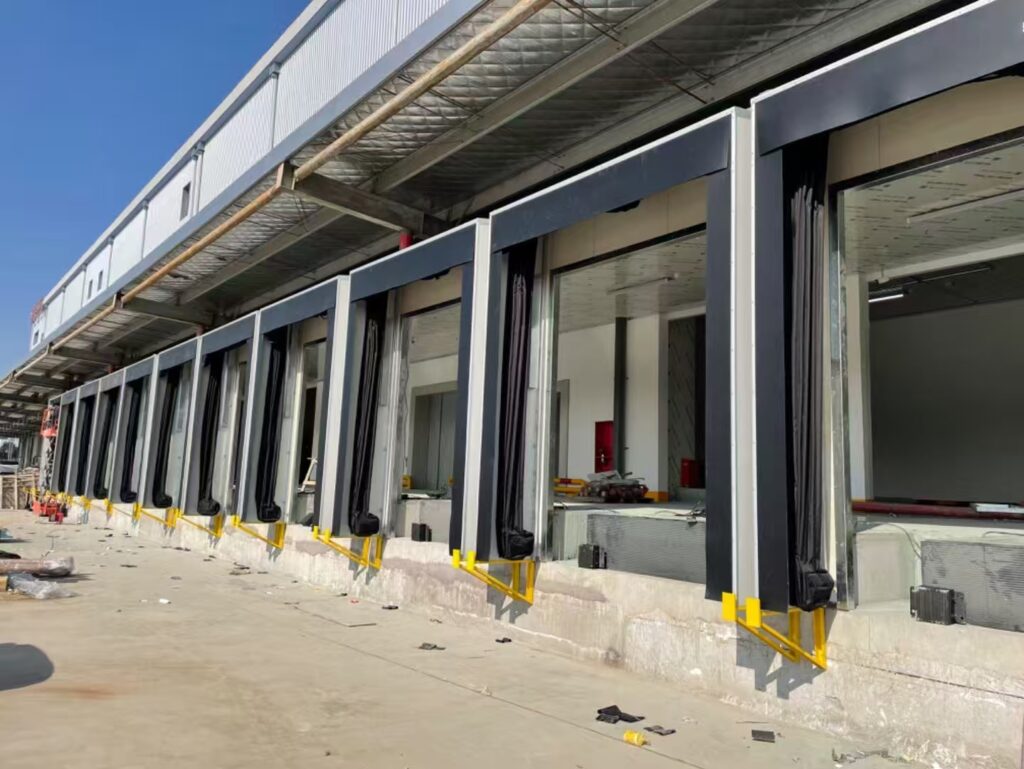
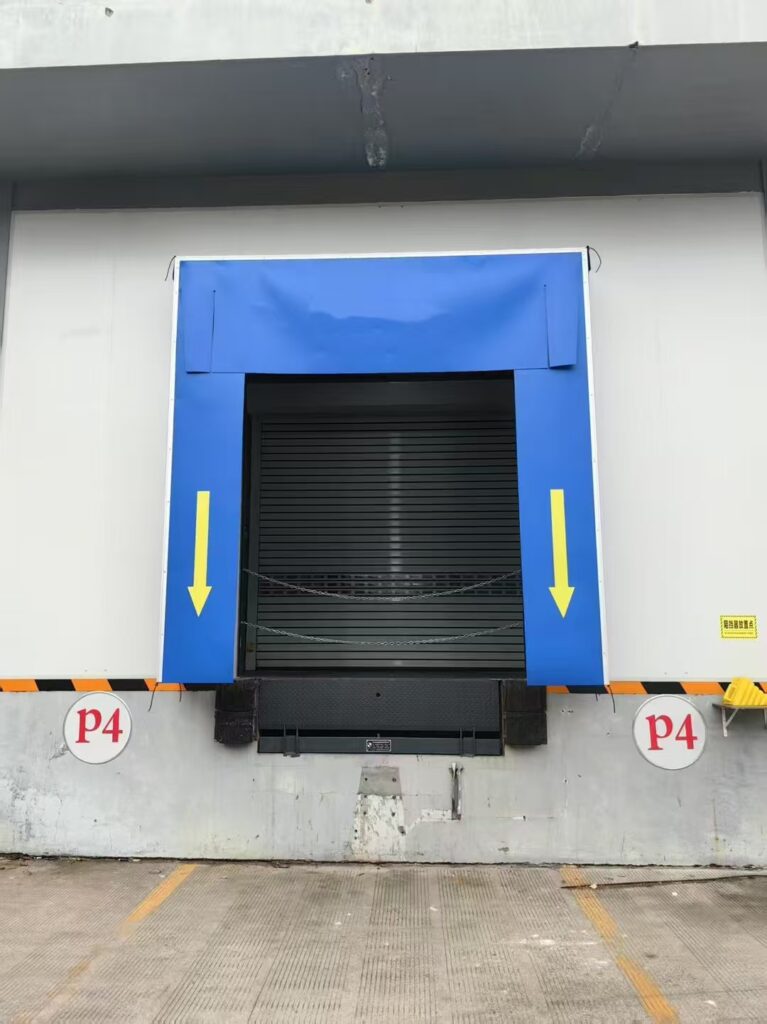
Dock shelters (or dock seals) are stationary barriers installed around warehouse doors to create a sealed connection with truck trailers. Their value in cold chain applications centers on:

  • Temperature Preservation: Made from insulated vinyl or foam-filled fabrics, they significantly reduce thermal transfer. This can cut refrigeration energy consumption by 18-25% (International Cold Chain Association, 2024).

  • Contamination Prevention: Brush-style seals effectively block dust, insects, and humidity from entering chilled environments. This is critical for pharmaceuticals and high-value perishables like vaccines.

  • Durability Features: They incorporate UV-resistant materials for facilities with frequent door cycles (e.g., 100+ daily operations). Fire-retardant options are also available, compliant with NFPA 101 safety standards.

Case Study: A UK frozen food warehouse retrofitted 14 doors with heated dock shelters, achieving annual energy savings of £32,000.

2. Dock Levelers: Bridging the Efficiency Gap

Hydraulic or mechanical dock levelers compensate for height differences between docks and trailers, enhancing operations by:

  • Boosting Loading Productivity: Their 12°-14° ramp angles accommodate diverse truck heights without manual adjustments. This also enables simultaneous forklift operations at multi-level docks.

  • Cold Chain-Specific Designs: Stainless steel models resist corrosion from defrosting condensate. Pit-style installations help prevent ice accumulation in sub-zero environments.

  • Improving Safety: Features like anti-slip diamond plating and automatic lip deployment have been shown to reduce worker injuries by 40% (OSHA data).

Example: A Canadian seafood processor achieved 98% trailer load utilization using AI-assisted levelers that predict optimal dock height.

3. Inflatable Shelters: Dynamic Climate Control

Inflatable shelters extend from docks into trailer interiors, creating temporary climate-controlled tunnels. Key advantages are:

  • Operational Flexibility: Adjustable lengths (2–4m) accommodate varying trailer depths. They deploy within 90 seconds, ideal for time-sensitive cold chain operations.

  • Regulatory Compliance: Meet USDA F

Case Studies for Cold Storage Dock Equipment Applications:

‌I. Fresh Food Cold Chain Cases‌

  • ‌Guangdong Fruit & Vegetable Wholesale Market Upgrade‌: Installing aerogel-insulated inflatable dock shelters led to monthly electricity savings of 4,200 kWh per loading bay, translating to annual cost reductions exceeding ¥360,000. Strawberry spoilage rates dropped from 6.8% to 2.1%, recovering ¥750,000 in annual losses. An intelligent linkage system uses RFID to identify truck information and automatically adjust sealing parameters, boosting loading efficiency by 20% and reducing monthly defrosting cycles by 4.

  • ‌Nordic Seafood Distribution Center‌: Deploying self-repairing material shelters (withstanding -40°C) combined with AI-powered air pressure regulation cut energy consumption by 22%. Frost accumulation at loading zones decreased by 80%, with temperature fluctuations stabilized at ±0.5°C. A dual-airbag structural design provides redundancy: if the outer layer ruptures, the backup maintains effective sealing for 4 hours.

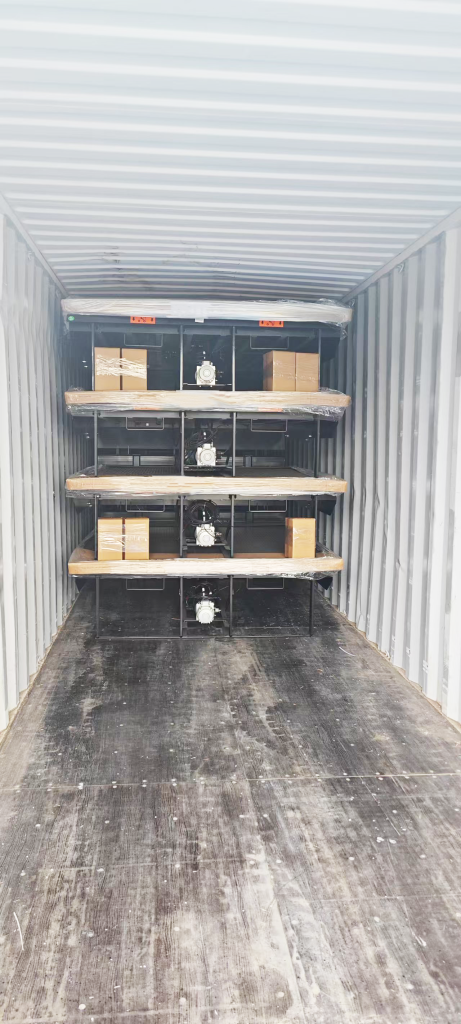
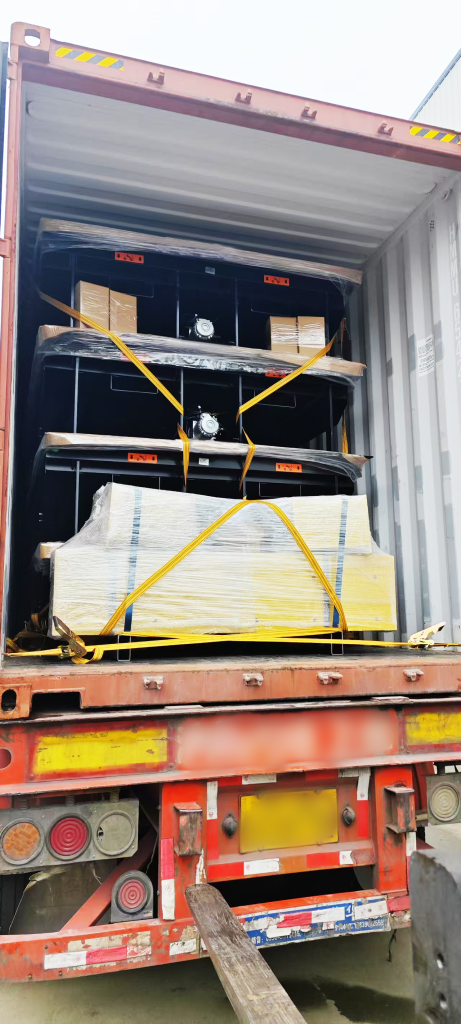
32 Hydraulic Dock Levelers Successfully Shipped to Overse

We recently shipped 32 hydraulic dock levelers to overseas clients. Designed for efficient and safe loading/unloading operations, these robust systems are ideal for warehouses, logistics hubs, and industrial facilities.


Key Features

  • Customizable Dimensions: Available in widths up to 2200mm, lengths up to 4500mm, and heights up to 800mm (special sizes available on request).

  • High Load Capacity: Supports dynamic loads of 6–10 tons, ensuring reliable performance under heavy use.

  • Adjustable Platform: Vertical working range of 0–340mm (up) and 0–300mm (down) for seamless alignment with truck beds.

  • Durable Build: Features a 6mm or 8mm diamond-pattern steel plate with 100µm powder coating for corrosion resistance.

Safety & Efficiency

  • Safety Components: Includes anti-collision strips, LED cargo lights, wheel wedges, and reversing guides to prevent accidents.

  • Hydraulic System: Equipped with a 380V three-phase motor, automatic hydraulic lock valves, and a single-button control for smooth, stable operation.

  • Low Maintenance: Integrated hydraulic pump and sealed components reduce upkeep needs.

Installation & Compliance

  • Precise Requirements: Reinforced pit construction (minimum 400mm base thickness) with pre-installed electrical conduits and safety edges.

  • Certified Design: Meets industrial safety standards, including 90° steel frame alignment and secure grounding.

In addition, we offer a full range of logistics equipment to streamline operations, including:

  • Telescoping Lip Dock Leveler

  • Edge Dock Leveler

  • Vertical Dock Leveler

  • Air Bag Dock Leveler

  • Sponge Dock Seals (fixed/adjustable)

  • Inflatable Dock Seals

  • Mechanical Dock Seals

For details on these solutions, visit [https://www.speed-doors.com/product/loading-equipment/] or contact our team directly.

PVC vs. Rubber High-Speed Doors: A Simplified Comparison

1. Introduction to PVC and Rubber High-Speed Doors

PVC High-Speed Doors:
The PVC High-Speed Door exemplifies modern efficiency with its lightweight, transparent PVC curtain (1.5mm thick) and adjustable speeds (up to 1.0 m/s opening). Designed for indoor warehouses, it balances visibility, speed, and corrosion resistance. Key features include galvanized steel frames, vision windows, and a 1,000,000-cycle lifespan.

Rubber High-Speed Doors:
Built for rugged environments, rubber doors use thick vulcanized rubber curtains (3–5mm) to withstand impacts and extreme temperatures (-30°C to +80°C). They prioritize durability over speed and are c ommon in heavy industries like mining or cold storage.

2. Shared Features

Both door types aim to enhance warehouse operations by:

Safety: Equipped with sensors (photocells, light curtains) and emergency systems (e.g., hand cranks).

Automation: Servo motors ensure smooth operation.

Customization: Adjustable speeds and optional frame materials (e.g., stainless steel).

Sealing: Brush or rubber track seals to block dust and drafts.

3. Key Differences

Aspect PVC Doors Rubber Doors
Material Lightweight, transparent PVC. Heavy-duty, opaque rubber.
Speed Up to 1.0 m/s (adjustable). Slower (0.3–0.8 m/s).
Visibility Vision windows (600–800mm). Requires external sensors.
Temperature Range -15°C to +50°C. -30°C to +80°C.
Cycle Life 1,000,000 cycles. 500,000–800,000 cycles.
Maintenance Low (smooth surface, rust-resistant). High (frequent wear checks).

4. Pros, Cons, and Ideal Applications

Type Pros Cons Best For
PVC Doors – High speed
– Low energy use
– Easy installation
– Less impact-resistant
– Limited temperature range
Indoor logistics, food processing, moderate climates.
Rubber Doors – Extreme durability
– Superior insulation
– Higher cost
– Slower operation
Cold storage, mining, heavy machinery zones.

5. Spotlight: PVC High-Speed Door

The PVC High-Speed Door stands out with:

Speed & Precision: 0.75–1.5kW servo motor with adjustable speeds.

Safety: Integrated photocells, CEDES light curtains, and wireless safety edges.

Durability: 1,000,000 cycles and corrosion-resistant frames (galvanized or stainless steel).

Ease of Use: Pre-assembled design for quick installation and minimal downtime.

Ideal for warehouses valuing efficiency, visibility, and cost-effectiveness, the PVC High-Speed Door is a versatile solution for high-traffic environments.

6. Conclusion

PVC and rubber doors cater to distinct needs:

PVC excels in speed, visibility, and everyday operations.

Rubber thrives in extreme conditions requiring brute strength.

For most warehouses, the PVC High-Speed Door offers a balanced blend of performance, safety, and longevity. However, rubber remains indispensable for niche industries. By aligning material strengths with operational demands, businesses can maximize productivity and ROI.


SIMPALL DOORS: Puertas de Alta Velocidad para Salas Limpias


Introducción a la Puerta de alta velocidad para salas limpias de SIMPALL

Puerta de alta velocidad para salas limpias de SIMPALL es una solución innovadora diseñada para entornos que exigen altos estándares de higiene y eficiencia. Ideal para laboratorios, farmacéuticas, centros de producción de alimentos y salas limpias hospitalarias, esta puerta combina tecnología avanzada con un diseño robusto.

https://www.speed-doors.com/product/mavi-clean-room-high-speed-door-w3500mm-x-h3500mm/

1. Aplicaciones Principales

  • Ambientes críticos: Salas limpias ISO Clase 5-8, zonas de procesamiento estéril.

  • Alto tráfico: Áreas con movimientos frecuentes de personas y equipos.

  • Interiores: Instalación en espacios cerrados para garantizar aislamiento térmico y de partículas.

2. Ventajas Clave

  • Instalación sencilla: Diseño modular que reduce tiempo y costos de montaje.

  • Autoreparación: El cortinaje se desprende de las guías ante impactos y vuelve a su posición sin daños.

  • Aislamiento superior: Guías estrechas y sellos de PVC ajustados para evitar contaminación cruzada.

  • Motor servo de alta calidad: Fabricado con tecnología líder en China, garantiza precisión y durabilidad.

  • Certificación IP54: Resistencia a polvo y salpicaduras, ideal para entornos exigentes.

  • Seguridad avanzada: Equipada con fotocélula CEDES y borde inferior suave para protección máxima.

  • Costo-eficiencia: Mantenimiento mínimo y vida útil prolongada (hasta 1,000,000 de ciclos).


Comparativa: Puerta de alta velocidad para salas limpias SIMPALL DOORS vs. Dynaco Rapid Seal PRO

Dynaco Rapid Seal PRO‌ Enlace: https://www.dynacodoor.us/

Diferencias Principales

Característica SIMPALL Dynaco Rapid Seal PRO
Material del marco Acero inoxidable 304 (estándar) Aleación de aluminio anodizado
Velocidad de apertura Hasta 1.5 m/s (ajustable) Hasta 1.2 m/s (fija)
Motor Servomotor con encoder absoluto Motor de corriente continua
Sistema de seguridad Fotocélula CEDES + cortina con borde suave Sensores infrarrojos básicos
Precio Económico, ideal para medianas empresas 20-30% más costoso

Similitudes

  • Aplicaciones: Ambas son aptas para salas limpias y zonas de alto tráfico.

  • Certificaciones: Cumplen con normas IP54 para resistencia ambiental.

  • Durabilidad: Ciclos de vida superiores a 500,000 operaciones.

  • Panel de visión: Opción de PVC transparente para monitorización visual.


Conclusión
SIMPALL DOORS destaca por su equilibrio entre rendimiento, seguridad y accesibilidad. Ideal para proyectos que buscan eficiencia sin comprometer el presupuesto.Si necesita una adaptación más específica o ajustada a un contexto regional, ¡no dude en consultarnos! 😊

5-Step Maintenance Checklist to Extend High-Speed Door Lifespan

‌High-speed doors are critical assets in industrial, commercial, and logistics facilities, offering energy efficiency, contamination control, and rapid access. However, their constant operation demands systematic maintenance to prevent costly breakdowns. The following guide provides a scientifically-backed maintenance checklist, which proves to be capable of extending the lifespan of the door by 40-60%, while reducing energy waste and safety risks.

Why Maintenance Matters

Studies show that 73% of high-speed door failures stem from neglected maintenance . A single unplanned downtime event can cost facilities 5,000−15,000 in lost productivity and repairs. Proper upkeep not only prevents these losses but also:

  • Reduces energy leakage by 15-30% through optimized sealing
  • Lowers motor replacement costs by 2.5x
  • Ensures compliance with safety standards

Step 1: Inspect Door Curtain & Seals (Weekly)

Key Tasks:

  • Visual Check:‌ Examine PVC/fabric curtains for cuts, cracks, or warping. Even a 2mm tear can compromise insulation.
  • Edge Seal Test:‌ Run a paper sheet along side/bottom seals; resistance indicates proper contact.
  • Cleaning Protocol:‌ Wipe with pH-neutral cleaner (avoid solvents degrading UV coatings).

Pro Tip:‌ For freezer doors (-30°C), you can check for ice buildup on seals to detect early condensation issues.

Step 2: Lubricate Tracks & Rollers (Once every two months)

Critical Components:

  • Guide Rails:‌ Remove debris with compressed air (max 30 psi) before applying NSF H1-rated silicone spray.
  • Roller Bearings:‌ Over-lubrication attracts dust – apply grease only until a thin film forms.
  • Alignment Check:‌ Use laser levels to verify rail parallelism.

Data Insight:‌ Proper lubrication reduces motor, cutting electricity costs (DOE, 2024).

Step 3: Test Safety Sensors & Auto-Reverse (Monthly)

Validation Process:

  1. Obstruction Test:‌ Place a 2”x2” object in the door’s path; ensure reversal within 0.5 seconds.
  2. Beam Alignment:‌ Verify the parallel connection of photoelectric sensors (deviation ≤3° causes 90% failure rate).
  3. Force Calibration:‌ Adjust torque settings to meet NFPA 80’s 30-lb maximum impact force.

Case Study:‌ A pharmaceutical warehouse avoided $220K in liability costs by fixing misaligned sensors that failed to detect forklifts.

https://www.highspeeddoor.cn/product/JM102-Butterfly-sensor.html

Step 4: Check Motor & Control System (Quarterly)

Diagnostic Toolkit:

  • Voltage Test:‌ Multimeter readings should stay within ±10% of motor nameplate ratings.
  • Circuit Analysis:‌ Look for arc marks or corrosion (which is common in damp environments) on the terminal blocks.
  • Software Update:‌ Install firmware patches to fix bugs in frequency inverters.

Red Flags:

Step 5: Schedule Professional Audit (Annually)

Professional technicians can be arranged to check it.

  • Dynamic Balance Test:‌ Measure vibration levels with accelerometers (ISO 10816-3 standards).
  • Cycle Count Analysis:‌ Compare actual vs. rated cycles.
  • Infrared Scan:‌ Detect overheated motor windings or electrical connections.

Cost-Benefit:‌ Facilities investing in professional audits save 34% on 5-year maintenance costs.

Maintenance Log Template

Date Task Findings Action Taken Next Due
2024-06-01 Curtain Inspection 3mm cut on bottom Patched with kit #7 2024-06-08
2024-06-15 Sensor Test 0.6s reversal time Adjusted sensitivity 2024-07-15

Avoid These 3 Costly Mistakes

  1. Using Petroleum-Based Lubricants:‌ Attracts dust and degrades PVC.
  2. Ignoring Cycle Counters:‌ Doors that exceed the rated cycle by more than 80% need to have their components replaced in advance.
  3. DIY Electrical Repairs:‌ 62% of the control board failures are attributed to improper voltage testing.

Conclusion

Implementing this 5-Step maintenance checklist can extend high-speed door service life from the average 7 years to 10-12 years. Facilities report a 22:1 ROI on maintenance spending through reduced energy bills, fewer fines, and uninterrupted operations. For specialized environments (e.g., explosive atmospheres or sterile cleanrooms), always consult OEM guidelines to amend this checklist.

Best PVC Roller Up Doors for Industrial Warehouses: Key Features & Top Picks

Industrial warehouses demand doors that combine durability, efficiency, and safety. PVC roller up doors have emerged as a top choice due to their lightweight construction, thermal insulation, and low maintenance requirements. This guide explores critical selection criteria and recommends industry-leading models for heavy-duty operations.


‌Why PVC Roller Doors Excel in Warehouses

‌High-Cycle Durability

Premium PVC doors withstand 50,000+ open/close cycles annually, ideal for facilities with constant forklift traffic. Reinforced slats with aluminum cores prevent warping in -30°C to 70°C temperature ranges.

‌Space Optimization

Vertical roll-up design eliminates swing clearance needs, maximizing dock space utilization – a critical advantage for warehouses with narrow loading bays.

‌Energy Efficiency

Multi-layer PVC curtains with foam insulation (R-values up to 4.2) reduce thermal transfer, cutting HVAC costs by 15-20% in temperature-controlled storage facilities.


‌Top 5 Industrial-Grade PVC Roller Doors

‌Dynaco Rapid Seal PRO

1.2m/sec operation speed for high-traffic docks

Military-grade polyester reinforcement

IP65-rated motor withstands dust/water jets

https://www.dynacodoor.us/

‌Assa Abloy Tectus

80km/h wind resistance certification

Fire-rated EN 16034 compliant

Integrated safety laser curtain

https://www.assaabloydss.com/en/products?_gl=1*1yw9js1*_up*MQ..*_gs*MQ..&gclid=EAIaIQobChMI4ZX8iPe4jAMV1hFECB0W7gjYEAAYASAAEgIU0fD_BwE

‌Rite-Hite Versa Duty

Crash-recovery system for impact resistance

USDA-approved for food warehouses

Self-cleaning bottom edge seal

http://ritehite.com/en/am

‌Rytec Xtreme Vue‌

Transparent PVC strips with 92% visibility

10-year warranty on curtain materials

IoT-enabled predictive maintenance

SIMPALL DOORS

Durable & Weather-Resistant

Fast & Reliable Operation

Easy Installation

Reliable After-Sales Service

https://www.speed-doors.com/

‌Selection Checklist for Buyers

‌Load Capacity‌: Minimum 150kg tensile strength for 4m x 4m doors

‌Safety Certifications‌: EN 12453 (anti-crushing) + EN 12604 (wind resistance)

‌Seal Systems‌: Dual silicone side brushes + magnetic bottom seals

‌Automation‌: 24V DC motors with battery

Scroll to Top